















How to choose magnetic foil correctly
With magnetic sheeting, details matter. At first glance, two materials may look the same, but in practice they differ in holding force, behavior on uneven surfaces, printability, and durability in everyday use. If you are figuring out how to choose magnetic sheeting for manufacturing, labeling, advertising, or regular operations, it is not enough to consider only size and price.
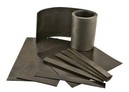
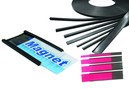
Magnetic sheeting is a flexible material with permanent magnetic properties. It is most commonly used where you need quick attachment without drilling, screws, or adhesive. Typical applications include vehicle advertising signs, interchangeable information systems, shelf labeling, planning boards, educational tools, or technical labels in production. However, different parameters matter in each of these cases.

How to choose magnetic sheeting based on application
First, you need to clearly define what the sheet is supposed to do. One material is suitable for short-term attachment of lightweight paper backing, while another is better for repeated placement on metal surfaces in a production hall. If the sheet will be frequently folded, rolled, or moved, its flexibility and resistance to mechanical stress are important. If it is meant to carry graphics, the quality of the top layer and compatibility with printing or lamination are decisive.
For advertising and presentation applications, flatness, a clean surface, and dimensional stability are usually the priority. In industrial labeling, reliable adhesion to the metal substrate and readability of the label even under demanding conditions are key. In a warehouse or workshop, it is also often important whether the sheet can be easily cut into smaller formats and whether it retains functionality after repositioning.
So if you are looking for an answer to how to choose magnetic sheeting, always start with the application. Only then does it make sense to compare specific technical parameters.
Sheet thickness and holding force
The most common mistake is underestimating thickness. A simple rule applies – the thicker the magnetic sheet, the higher the holding force in most cases. However, this does not mean that the thickest option is automatically the best. Greater thickness increases weight, changes material flexibility, and can complicate application on smaller radii or finer surfaces.
For light labeling, interchangeable tags, or office use, a thinner sheet is usually sufficient. For vehicle advertising magnets or larger boards, a more robust version is more suitable, as it holds better and withstands airflow or frequent handling. In industrial conditions, it is also necessary to consider that grease, dust, or surface irregularities reduce the actual holding force.
It is also important to consider the type of metal surface the sheet will be applied to. Magnetic sheeting performs best on smooth ferromagnetic substrates. On painted, contaminated, or uneven sheet metal, effectiveness can be noticeably lower. Therefore, selection should not rely only on technical data sheets, but also on real use conditions.
Load capacity is not the same as holding force
In practice, these terms are often confused. Holding force describes how strongly the sheet adheres to an ideal steel surface. Load capacity, however, depends on surface orientation, the weight of the carried object, friction, and safety margin. For example, when the sheet holds an object on a vertical surface, shear force and surface finish come into play.
That is why it is reasonable to work with a margin. If the sheet is intended to carry an information panel, sample board, or lightweight cover, the selection should not be based on limit values.
Surface finish determines further processing
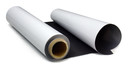
Magnetic sheeting is not just a magnetic layer. The top surface is equally important. It determines whether the sheet can be written on, printed on, used for applying graphics, or simply serve as a technical carrier.
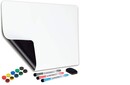
A sheet with a white PVC surface is suitable where a clean appearance and the possibility of printing or applying graphic elements are required. For boards and planning systems, surfaces that can be written on with dry-erase markers are often used. If a self-adhesive layer is to be applied, compatibility between the adhesive and the substrate, as well as long-term dimensional stability, must be considered.
In technical environments, resistance to abrasion and easy maintenance are important. A glossy surface may look better for presentation, but a matte finish is more practical where glare occurs or frequent cleaning is required. Therefore, not only aesthetics but also operating conditions matter.
Self-adhesive or without adhesive?
Some magnetic sheets are supplied as pure magnetic material, while others have a self-adhesive layer on the non-magnetic side. This solution is suitable when you want to create a magnetic carrier from plastic, paper, cardboard, PVC board, or a thin panel. However, the adhesive layer must match both the substrate and usage conditions.
It works reliably on smooth and clean surfaces. On porous, dusty, or greasy materials, the result may be unsatisfactory. It should also be considered that while the magnetic sheet itself is flexible, the bonded material may not be. If a rigid substrate is used, the entire part loses some flexibility.
Therefore, it is worth considering whether you need a ready-made self-adhesive sheet or rather a magnetic material without adhesive that will be processed further in another way.
Indoor and outdoor use
The difference between indoor and outdoor use is crucial. Indoors, requirements are generally lower and focus mainly on handling, appearance, and readability. Outdoors, factors such as moisture, UV radiation, temperature fluctuations, and, in moving applications, aerodynamic stress come into play.
If magnetic sheeting is used on vehicles, it is not enough for it to hold on the bodywork when stationary. It must have sufficient holding force, appropriate thickness, and a properly prepared surface. At the same time, regular cleaning and inspection are necessary to prevent dirt or moisture accumulation underneath. This affects not only functionality but also paint protection.
For long-term outdoor use, it is also important to consider the durability of the surface layer. Not every sheet designed for indoor use can withstand continuous exposure to sunlight and rain without changes in appearance or properties.
Temperature and environment affect material behavior
Magnetic sheeting is not suitable for every environment. Higher temperatures can reduce magnetic performance, and some surface layers or adhesives have limited operating ranges. In environments with heat, oils, chemicals, or high dust levels, it is advisable to consult the application in advance.
The same applies in cold conditions. The material may become stiffer and less adaptable to the surface, affecting adhesion and handling.
Dimensions, cutting, and tolerances
In smaller projects, the focus is often simply on whether the sheet can be cut with scissors or a knife. In professional use, however, dimensional accuracy, production repeatability, and edge stability become important. If the sheet is used to produce labels, nameplates, pictograms, or parts for repeated series, consistent material quality is essential.
It is also important to note that very narrow or small cut pieces may have lower practical holding force than a larger continuous surface. Magnetic sheeting performs best where there is sufficient contact with the metal substrate. If the part is too small or complex, the result may be weaker than the material thickness alone would suggest.
When a universal solution is not enough
A universal magnetic sheet exists more in catalogs than in real operations. Material for a school board, a vehicle advertising magnet, and industrial labeling may share a base, but have different requirements for surface, thickness, and long-term stability. If the application is important in terms of safety, frequent use, or company presentation, the choice should not be a compromise.
In practice, it is useful to ask a few simple questions. What surface will the sheet be applied to? Will it be used indoors or outdoors? How often will it be moved? Do you need printing, writing, adhesive application, or just pure magnetic function? And what safety margin do you require?
These questions usually quickly reveal whether a standard product is sufficient or whether a more technically precise solution is needed. For specific requirements, it is more reasonable to consult in advance than to later deal with weak adhesion, deformation, or unsuitable surfaces. This is also why it is beneficial to work with a specialist supplier who understands not only the product range but also real operational use.
So when selecting magnetic sheeting, do not treat it as a simple consumable. It is a functional technical component, and a good choice will show immediately – in reliability, easier handling, and in the fact that the solution will work exactly as you need.