














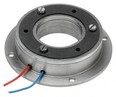



Magnetic clamping vs vacuum: what to choose
When the decision between two clamping principles is on the table, it is not a minor technological detail, but a question of how production will actually work. The topic of magnetic clamping vs. vacuum clamping therefore does not concern only the method of holding the workpiece. It affects preparation time, tool access, stability during machining, safety and repeatability of the result.
In practice, it often becomes clear that both solutions have their clear place. The problem arises when the choice is made according to habit or the price of the system itself, rather than according to the workpiece, material and technological operation. This is exactly where it is decided whether clamping will be a reliable part of the process or its weak point.
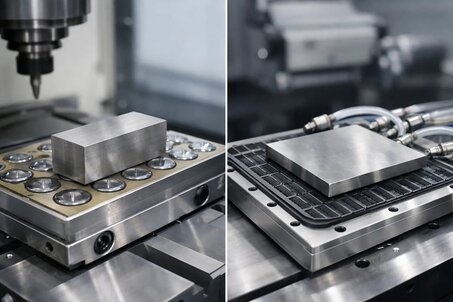
Magnetic clamping vs. vacuum clamping when selecting technology
The basic difference lies in the principle of action. Magnetic clamping uses magnetic force to hold ferromagnetic material. Vacuum clamping creates negative pressure between the clamping surface and the workpiece, pressing it against the table or fixture. At first glance, these are only two ways to achieve the same goal. In reality, they behave differently in every important production parameter.
A magnetic system is the natural choice where steel, cast iron and other ferromagnetic materials are used. The advantage is usually fast clamping, freer access to the workpiece and stability even under higher cutting forces. Vacuum, on the other hand, is used with non-ferromagnetic materials, thin plates, non-ferrous metals, plastics, composites, glass or wood. The decision therefore does not start with the question of which system is generally better, but for what material and what operation it is intended.
When magnetic clamping clearly makes sense
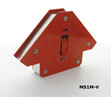
When machining steel parts, magnetic clamping is one of the very effective solutions. If the workpiece is sufficiently magnetically conductive and has a suitable contact surface, clamping is fast and precise. The need for side mechanical elements that would obstruct the tool is eliminated, and the operator can shorten setup times.
A major advantage is the accessibility of the machined surface. Since the workpiece is not held between classic jaws or stops to the same extent as with mechanical clamping, the machining centre can use a larger part of the surface. This is important especially in milling, grinding or finishing operations, where a clear working area matters.
Magnetic clamps also work well in repeated serial operations. If the geometry of the part is stable and the process is repeated, the operator achieves high productivity. From a technical point of view, however, it is necessary to monitor material thickness, flatness of the seating surface and the nature of machining. With very thin or deformed parts, the behaviour of the workpiece may differ from what the nominal holding force of the system suggests.
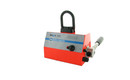
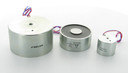
The type of magnetic clamp is also important. Permanent, electro-permanent and electromagnetic systems differ in control, safety logic and suitability for a specific operation. In industrial practice, it is therefore not enough to say that the magnet will hold. What matters is how it will hold during interrupted cuts, vibrations, heating and handling of parts of different sizes.
Where vacuum clamping has the advantage
Vacuum clamping is used where a magnet does not help at all or only to a limited extent. Typical examples include aluminium plates, plastic parts, composites, laminates, wooden boards or glass elements. With these materials, negative pressure is often the most practical way to achieve clean and fast holding without mechanical damage.
Its strong point is the even pressing of a flat part against the working surface. With thinner materials, this can be an advantage, especially if the goal is machining, cutting or engraving without unnecessary clamping obstacles. Vacuum also makes it possible to work with large formats, where mechanical clamping would delay and complicate production.
However, it is necessary to take into account that a vacuum system is sensitive to leaks, the quality of the seating surface and the actual contact area between the workpiece and the table. If the part is too small, porous or has a complex shape, negative pressure may not create sufficient holding force. Similarly, in more aggressive machining conditions, lateral resistance to workpiece movement may become a limitation.
Precision, force and stability are not the same thing
When comparing magnetic and vacuum clamping, holding force is often confused with real stability during machining. That is a mistake. In catalogue data, a system may look very convincing, but in operation the entire set of conditions is decisive.
Magnetic clamping is usually very convincing when working with ferromagnetic parts, because the force acts directly through the material and the system generally has good resistance to dynamic load. At the same time, however, it is true that with a small contact area, thin material or unsuitable pole layout, the result may deteriorate.
Vacuum clamping, on the other hand, is excellent for flat parts, but its force is physically limited by the pressure difference and the size of the effective area. In other words, with smaller parts and higher lateral forces, the reserve decreases quickly. If the sealing also deteriorates or dirt enters the system, reliability drops.
It is therefore advisable to assess the technology not according to one value, but according to the entire application. Material, part shape, thickness, quality of the lower surface, direction of forces during machining, required precision and the number of pieces in a series have greater informative value than the force figure alone.
Maintenance and operation in real production
When deciding, it also matters what the technology will require after deployment in production. Magnetic clamping is often operationally straightforward. If the system is correctly selected and maintained, its operation is usually simple and repeatable. Clean seating of the workpiece, function checks and, for some types, regular service or verification of the control unit condition are important.
Vacuum systems are more sensitive to the condition of seals, hoses, filters and the vacuum pump. In dusty or contaminated environments, more thorough inspection must be expected. If maintenance is neglected, the problem does not always appear immediately, but it can lead to unstable clamping and fluctuations in production quality.
In practice, therefore, it is not only about what the system can do at the beginning, but how reliably it will do it after months of operation. For manufacturing companies, this difference is essential. Downtime due to a seemingly small leak or an incorrectly selected magnetic table is often more expensive than the initial saving at purchase.
Magnetic clamping vs. vacuum clamping in specific applications
If steel plates, burnouts, ground parts or ferromagnetic components are machined with a requirement for quick changeover and good tool access, magnetic clamping usually has the advantage. It is stable, efficient and, with the correct configuration, suitable even for more demanding operations.
If aluminium sheets, plastic parts, composite panels, chipboard or thin non-ferromagnetic plates are involved, a vacuum solution will often be the more natural choice. It enables clean clamping without mechanical intervention into the edges and is very productive for large-format parts.
There are also borderline cases. Thin steel sheet may theoretically be suitable for a magnet, but with deformation or low stiffness the result may be worse than expected. Conversely, a smaller non-ferromagnetic part may be too small for safe vacuum clamping. In precisely such situations, technical assessment of the specific application matters, not only selection according to a general category.
What to consider before the final decision
A good decision is created from a combination of technical and operational questions. First, the material and geometry of the workpiece must be determined. Then the nature of the operation, meaning whether it is milling, grinding, drilling, cutting or handling. This is followed by assessment of cutting forces, required precision, repeatability and part changeover time.
It is equally important to look at the production environment. In a clean and stable process, vacuum can work very well. In heavier industrial operation with metal dust, vibrations and higher load, a magnetic solution may be more operationally reliable. Even here, however, no universal rule applies. The specific configuration is decisive.
Industrial companies often look for one technology that covers everything. This is usually the exception rather than the rule. In many operations, the best results come from combining several clamping methods according to the type of part. That is why it makes sense to consult the selection with a supplier who understands not only the product, but also the application and service. This is exactly what the practice of companies that have been working with magnetic systems for a long time, such as SELOS Magnety, is based on.
If you are therefore deciding whether to choose magnet or vacuum, do not look for a universally winning solution. Look for a system that will work reliably with your material, your parts and your production pace. Correct clamping is not an accessory to the technology, but a condition for keeping the entire process where it should be.