












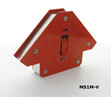

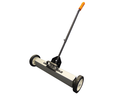
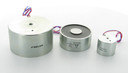

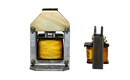



Magnetic equipment service for industry
In industrial operation, it is usually not only the strength of the installed magnetic system that matters, but also the condition in which it actually operates. This is exactly where industrial magnetic equipment servicing separates reliable technology from technology that starts causing downtime, inaccurate separation, or handling risks.
Magnetic equipment is often perceived as maintenance-free. That is only partly true. A permanent magnet itself does not require a conventional drive or lubrication, but the entire device is always a combination of mechanical, structural, and operational components. In separators, the condition of the housing, material flow, and cleanliness of the working surface are critical. In magnetic chucks, the flatness of the contact surfaces, the functionality of the switching mechanism, and the overall sealing of the system are essential. In lifting magnets or electromagnets, wear of control components, cables, power supply systems, and safety elements also becomes important.
When servicing is postponed, the problem usually does not appear all at once. First, efficiency decreases, then the need for operator intervention increases, and eventually a failure occurs that stops the process at the worst possible moment. In industry, servicing is therefore primarily a preventive tool.
When Industrial Magnetic Equipment Servicing Matters Most
Servicing provides the greatest benefit wherever magnetic equipment directly affects material flow, production quality, or handling safety. A typical example is magnetic separators used in the food industry, plastics processing, woodworking, recycling, or bulk material handling. If a separator does not work correctly, metal contaminants can enter the next stage of production. This means not only poorer separation results, but also possible damage to downstream machinery.
The same applies to magnetic chucks in machining operations. Reduced or uneven clamping force may not cause an immediate failure. More often, it appears as poorer workpiece stability, vibrations, reduced accuracy, or longer setup times. In such cases, servicing is not just about repairing the device, but also about restoring original productivity.
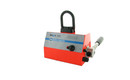
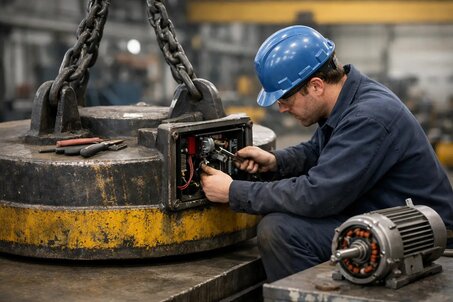
With handling magnets, the situation is even more sensitive. Here, it is no longer only about performance, but also operator and material safety. Any reduction in reliability, damage to the contact surface, or inaccurate control function requires professional assessment.
What Professional Servicing Includes in Practice
Servicing should not be understood as merely replacing a damaged component. Proper service begins with diagnostics. Diagnostics determine whether the issue lies in the magnetic circuit itself, the mechanical section, contamination of working surfaces, incorrect operation, or a combination of several factors.
For magnetic separators, the condition of the housing, sealing, wear of exposed parts, material buildup, and the actual ability to capture metal contaminants are evaluated. In some applications, measuring magnetic induction and comparing it with the required values for a specific process is also important. If the equipment operates in a demanding environment, servicing must also account for temperature, humidity, abrasive wear, and chemical aggressiveness of the medium.
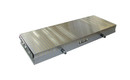
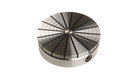
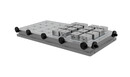
For permanent magnetic chucks or tables, technicians inspect the switching mechanism, flatness of the working surface, condition of pole extensions, and overall wear. If the equipment has been overloaded long-term or used with unsuitable workpieces, the issue may not be the magnet itself, but the application. That is why professional servicing often overlaps with technical consulting.
With electromagnets, the inspection scope is broader. The condition of windings, insulation, connections, power supply, and control systems must be checked. In this case, servicing is no longer only a matter of performance, but also electrical safety and operational stability.
Most Common Signs That Equipment Needs Service
Some warning signs are obvious, while others are easy to overlook. Typical symptoms include weaker metal separation, more frequent clogging, reduced lifting or clamping efficiency, increased cleaning requirements, unusual resistance in switching mechanisms, damaged working surfaces, and changes in device behavior after prolonged operation.
Importantly, not every performance drop means permanent loss of magnetic properties. In many cases, the issue is caused by contamination, mechanical damage, improper installation, or operation outside recommended parameters. This is exactly where professional diagnostics differ from rough assumptions. Instead of replacing the entire device unnecessarily, a targeted service intervention may be enough.
Service or Replacement? Technical Condition and Economics Decide
In practice, the goal is not to repair everything at any cost. A good service decision must consider the technical condition of the equipment, spare part availability, the importance of the device for production, and the expected lifespan after repair.
If a separator or chuck has a solid technical foundation, servicing is often economically advantageous. It restores functionality, extends service life, and reduces the risk of unplanned downtime. However, if the equipment is structurally outdated, overloaded long-term, or no longer suitable for the current application, modernization or replacement may make more sense.
A competent service partner should therefore not automatically recommend repair only. They should be able to determine when repair is worthwhile, when modification is appropriate, and when a new system with higher efficiency or safety is the better solution.
Why Visual Inspection by Operators Is Not Enough
Routine operator checks are useful, but they have limitations. Operators may notice damage, contamination, or behavioral changes, but they can rarely determine whether the issue lies in the magnetic circuit, the mechanics, or incorrect operating conditions. In many systems, the actual performance decline becomes visible only in product quality or failures of downstream technology.
Professional servicing relies on measurements, experience, and knowledge of specific applications. This is especially important in continuous operation or technologically sensitive processes. In such environments, waiting until a failure causes a shutdown is rarely worthwhile.
Servicing as Part of Operational Reliability
The best results come when servicing is not performed only after a breakdown. Preventive inspections are especially valuable for heavily loaded equipment, dusty or abrasive environments, and operations where failures create secondary costs. These may include damaged machinery, wasted material, complaints, or safety incidents.
Service intervals are not universal. They depend on the type of equipment, operating intensity, handled material, and environmental conditions. A magnetic separator in plastics production requires a different maintenance regime than a lifting magnet in steel processing or warehouse operation. Inspection schedules should therefore be based on actual operating conditions, not only on calendar intervals.
For many companies, it is beneficial when servicing is handled by a partner who understands not only the product itself, but also its practical application. The combination of supply, technical consulting, and service support is often decisive in demanding industrial applications. This is where cooperation with a specialist such as SELOS Magnety becomes valuable, because they understand the difference between a catalog product and a real operational requirement.
What to Focus on When Choosing a Service Partner
Selection should not depend only on whether the provider can disassemble and reassemble the equipment. Important factors include knowledge of magnetic materials, equipment design, operational limitations, and safety requirements. Equally important is the ability to recommend the next step — whether cleaning and adjustment are sufficient, repair is necessary, or the application requires a technical redesign.
Availability also matters in industrial environments. If a company waits weeks for diagnostics or a basic intervention, servicing loses much of its value. That is why expertise alone is not enough. Spare parts availability, measuring equipment, service capacity, and the ability to communicate technically and precisely are equally important.
Industrial Magnetic Equipment Servicing Is Not an Optional Extra
In many operations, servicing is still seen as a secondary activity that can be addressed only after a problem occurs. Practical experience shows the opposite. Industrial magnetic equipment servicing directly affects technological performance, output quality, workplace safety, and investment lifespan.
If magnetic equipment plays an important role in a process, servicing should not be merely a reaction to failure. It should be part of operational discipline. Only then does a magnetic system deliver what is expected from it — reliable, predictable performance without unnecessary downtime.