



















Top solutions for magnetic sorting in practice
In production and recycling, the problem often appears simple - ferromagnetic particles must be reliably separated from the material flow, the technology must be protected and operation must not be slowed down. That is why top magnetic sorting solutions are not evaluated according to their catalogue name, but according to how they work with a specific grain size, material layer, conveying speed and required output purity.
Magnetic sorting is not one technology for everything. A recycling line for construction waste needs a different solution, food production needs another, a plastic injection moulding plant needs another, and a machining workplace needs another. If the input analysis is neglected, the result is either insufficient separation or unnecessarily oversized equipment that does not bring adequate benefit.

Where top magnetic sorting solutions determine the result
Magnetic sorting brings the greatest benefit where metal contamination causes real operational losses. This may involve protecting crushers, mills, presses, extruders and conveying routes. Increasing the purity of the final product is equally important, whether in the processing of secondary raw materials, plastic regranulates, wood chips, bulk mixtures or technological liquids.
In practice, three goals are often pursued at the same time. The first is protecting equipment from damage caused by metallic impurities. The second is improving material quality for further processing or sale. The third is process stability, because unplanned shutdowns are usually more expensive than the separation technology itself.
Basic overview of solutions according to application type
When selecting, it makes sense to start with the question of in what form the material moves. Dry bulk material is separated differently from coarse waste on a belt, and differently again from a liquid or fine suspension.
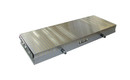
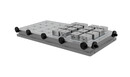
Magnetic plates, grids and rods
These solutions are used mainly where material falls by gravity or flows in closed piping. Typical applications include silos, hoppers, pipe routes and dosing systems. The advantage is simple integration and good efficiency with finer ferromagnetic particles.
The decisive factor is how the material is guided along the active magnetic surface. If the layer is too thick or the flow is unstable, part of the contamination may bypass the magnetic field. That is why it is not enough to monitor only the strength of the magnet, but also the geometry of the entire node.
Over-belt separators and magnetic drums
In continuous lines, separators placed above the belt and drum separators are among the most common top magnetic sorting solutions. They are suitable for high-volume material flows where iron impurities need to be removed continuously without interrupting operation.
An over-belt separator works well with coarser material and where it is possible to correctly set the distance from the belt, flow speed and equipment position. A drum separator, on the other hand, helps where the material is to divide the flow into magnetic and non-magnetic fractions after passing through the device. The choice between them depends on whether you want primarily to protect the technology or already deliberately sort the material for further processing.
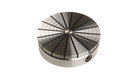
Magnetic rollers and roller separators
For finer material and higher cleanliness requirements, magnetic rollers are often effective. They are used in recycling, granule sorting and technological nodes where smaller particles need to be captured from a thinner material layer. Their advantage is more precise contact between the material and the magnetic field, but they react more sensitively to uneven dosing.
Separators for liquids and cooling emulsions
Solutions for liquid media form a separate category. In machining, grinding or emulsion filtration, magnetic sorting has a significant impact on liquid service life, surface quality and the load on subsequent filtration stages. Here, not only the capture of metal particles is important, but also easy cleaning and resistance to operating conditions.
What determines the choice of the right solution
The most common mistake is selection according to a single parameter, usually declared magnetic force. This is important, but it is not sufficient on its own. The result is determined by a combination of several factors.
Type and size of contamination
It is necessary to know whether the material contains coarse pieces of iron, fine abrasive dust, scale, chips or a mixture of different particles. Coarse pieces are captured relatively easily. Fine particles are more demanding, especially if they are bound in the material layer or move at high speed.
Layer height and conveying speed
Even a strong separator loses efficiency if it is too far from the material or if the contamination moves outside the optimal field zone. With conveyors, it is therefore necessary to assess belt width, feed height, travel speed and mounting position. Sometimes changing the position of the device helps more than using a more powerful magnetic system.
Material characteristics
Homogeneous bulk material is separated more predictably than a sticky, wet or lumpy mixture. Moisture can cause build-up, which changes material flow and makes cleaning more difficult. With abrasive materials, the mechanical resistance of the separator and service intervals must also be taken into account.
Cleaning and maintenance requirements
A manually cleaned solution may be suitable where there is little contamination and access to the device is simple. In continuous operations or with a higher capture frequency, an automatic system is usually more suitable. The higher acquisition cost often pays back here through more stable operation and a lower need for operator intervention.
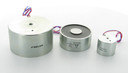
Permanent magnets or electromagnets
This question appears regularly. Permanent magnetic systems have the advantage that they do not require power supply to generate the magnetic field. They are energy-efficient, structurally simpler and, with correct design, very reliable. That is why they are used in a large number of standard separation applications.
Electromagnets make sense where there are specific requirements for regulation, field switching or handling certain operating modes. On the other hand, they bring higher demands on power supply, control and service. The suitable solution therefore depends on the specific technology, not on the general idea that one principle is always better.
When the device is not enough and a complete functional node is needed
In many operations, the problem is not the separator itself, but the way it is incorporated into the line. If the material falls off-axis, if the layer fluctuates, if access for cleaning is unsuitable or if the device is installed only after the point where contamination has already managed to damage the technology, the result will not be good.
That is why, in industrial applications, it pays to solve magnetic sorting as a whole. Position, mounting, service access, cleaning method and connection to other technological elements are important. A technical consultation before selection can save not only the investment, but also time when commissioning the equipment.
Typical operations where the difference between an average and a correct solution becomes clear
In construction waste recycling, the priority is usually the protection of crushers and the separation of iron parts from a heterogeneous flow. Here, performance with a larger material layer and resistance to impact loading are decisive. In plastics production, the goal is rather input cleanliness and protection of extruders, so finer contamination and higher requirements for separation precision are involved.
In the wood-processing industry, nails, staples and metal residues that damage knives and tools are a risk. In metal production and machining, on the other hand, separation of metal sludge and fine particles from emulsions is often important. Each of these environments places different requirements on the shape of the equipment, field intensity, cleaning and service.
How to proceed with the design without unnecessary mistakes
A reasonable procedure starts with operational data. You need to know the type of material, its volume, the width and speed of the conveyor, the size and nature of contamination, the required cleanliness and the operating mode. Without this, the solution is selected blindly.
If conditions are variable, it is good to allow for a reserve, but not blindly. Oversized equipment is not automatically better. It may require more space, be more expensive to integrate and, in some cases, may not bring noticeably higher efficiency if the problem lies in poor material guidance.
In similar applications, SELOS Magnety builds on technical assessment of the operation, not only on selecting an item from the product range. This is essential in magnetic sorting, because actual performance is confirmed only in the specific conditions of the line.
Top magnetic sorting solutions are not always the strongest ones
In technical practice, the best solution is usually the one that reliably fulfils its purpose, is serviceable and maintains its parameters over the long term. In one case, it may be a simple magnetic grid in a correctly designed position; in another, an automatic over-belt separator or a drum system integrated into a sorting line. What matters is function in operation, not the impression created by technical data on paper.
If magnetic sorting is to work long term, the entire process must be considered - from the nature of contamination through material flow to maintenance and service. This is exactly where the purchase of a component differs from a truly correct technical solution.
A good separator is not recognized by the fact that it is installed in the line. It is recognized by the fact that machines stop less often, the material is cleaner and the operator does not have to solve the same problems again every week.