









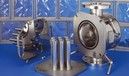

Demagnetisation of metal parts in practice
If a steel part behaves like a weak magnet after grinding, it is not a curiosity but a real manufacturing problem. Chips stick to functional surfaces, measurements fluctuate, small particles get caught during assembly, and automated handling introduces deviations that take unnecessarily long to trace. That is why demagnetization of metal parts is a standard operation in many plants, not an add-on.
Residual magnetism occurs more often than expected. It appears after grinding, turning, milling, stamping, after magnetic inspection, and also after handling with strong permanent magnets or electromagnetic chucks. In some parts it is not an issue. However, in precision components, bearing parts, molds, tools, shafts, or thin-walled castings, it can affect both quality and process stability.
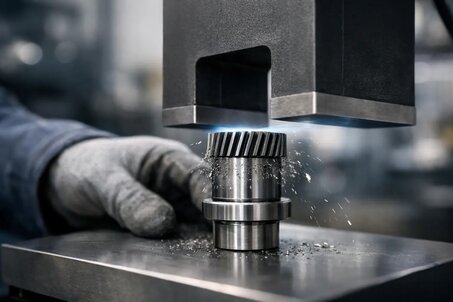
When is demagnetization of metal parts really necessary
The most common mistake is the assumption that every magnetized part must automatically be demagnetized. In practice, it depends on the subsequent use. If the part goes into an environment where the magnetic field does not affect function or surface cleanliness, intervention may not be necessary. However, if precise measurement, surface treatment, assembly, or packaging of sensitive components follows, residual magnetism is usually undesirable.
A typical signal is metal particles sticking to the surface after machining or washing. The part may appear clean, but fine metal dust remains in holes, grooves, or on sealing surfaces. This is critical especially where tight tolerances are required or where contamination can shorten the service life of the assembly.
Another issue arises during measurement. Some measurement methods and sensors are sensitive to residual magnetic fields. If parts are stored close together, they may influence each other or attract fine ferromagnetic contaminants from the surroundings. The result is instability that cannot be resolved by more thorough cleaning alone.
Why parts become magnetized even without direct contact with a magnet
Ferromagnetic materials, especially steels and some cast irons, respond to external magnetic fields by changing the orientation of their magnetic domains. If the field is strong enough or acts repeatedly on the part, some of this orientation remains even after the source of the field is removed. This is known as remanence, or residual magnetism.
In practice, this occurs in various ways. A significant influence comes from magnetic clamping during machining, magnetic crack inspection, contact with separation or handling systems, as well as machining itself, where the material is locally subjected to mechanical and thermal stress. In long or slender parts, orientation within the Earth’s magnetic field may also have an effect, although it is usually not the main cause of the problem.
It is also important to note that there is no universal threshold at which every part is “too magnetic.” The outcome depends on the material, shape, size, subsequent processing step, and required sensitivity of the application. This is why demagnetization must always be assessed in the context of the specific production process.
How demagnetization of metal parts works
The principle is technically simple, although proper execution is essential. The goal is not to reverse the polarity of the part, but to gradually reduce the alignment of magnetic domains so that the resulting residual field approaches the lowest possible value.
The most common method uses an alternating magnetic field whose intensity is gradually reduced. The part is moved through the field or the field strength decreases over time. This repeatedly rearranges the magnetic domains and disperses their overall orientation. If performed correctly, residual magnetism is reduced to an acceptable level.
For simple components, the result is usually stable and repeatable. For massive parts, geometrically complex components, or materials with higher coercivity, demagnetization may be more demanding. In some cases, a single pass is not sufficient and the process must be adjusted according to geometry and the direction of the original magnetization.
Methods and equipment depending on the type of operation
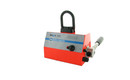
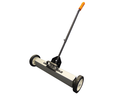
In small-scale or service environments, bench-top and portable demagnetizing devices are used. They are suitable for tools, smaller components, molds, knives, or parts that need to be treated continuously during production or maintenance. Their advantage is flexibility. Their limitation is smaller working space and lower efficiency for larger or thick-walled parts.
In production, conveyor-type demagnetizers are more commonly used. The part passes through a coil or working zone, and demagnetization can be integrated directly into the production flow – after machining, before measurement, before washing, or before assembly. This solution is suitable where repeatability and short cycle times are required.
A separate category includes solutions for long bars, pipes, shafts, and profiles. In these cases, the direction of magnetization and the way the part moves through the field are critical. If the configuration is incorrect, the part may be demagnetized only partially or unevenly. In practice, selecting equipment based only on opening size is not sufficient. Material, weight, wall thickness, and required residual value also play a role.
What most affects the result
Material has the greatest influence. Low-carbon steels are generally easier to demagnetize than hardened or alloyed materials. Geometry is also important. Sharp edges, long slender shapes, and locally massive cross-sections cause uneven field distribution, which complicates the process.
The origin of magnetization is also significant. A part that has come into contact with a strong permanent magnet or has been magnetized during crack inspection may require different settings than a component with weak residual magnetism after grinding. Orientation of the part in the equipment and the speed of passage through the working zone also make a difference.
Handling after demagnetization is another factor. Even if the process is performed correctly, placing the part on a magnetic table or near a strong field can reintroduce the problem. This is why demagnetization should be treated as part of the technological process, not as an isolated step at the end.
Measuring residual magnetism without guesswork
In technical applications, it is not enough to say that a part “no longer attracts chips.” This may serve as a rough indication, but it is insufficient where repeatability is required. Residual magnetism is measured, most commonly using a gaussmeter or teslameter with a probe suitable for the shape of the part.
During measurement, it is important to know where to take readings. Critical areas include functional surfaces, edges, holes, or clamping points. A single value from a random point may be meaningless. For reliable results, measurement points, acceptable values, and handling conditions before and after measurement must be defined.
In practice, it often turns out that the issue is not insufficient equipment performance, but the lack of a defined methodology. Without it, results vary depending on the operator, part position, or production pace. That is why, in industrial use, attention should be paid not only to the demagnetizer itself, but also to process control.
Where demagnetization is most often underestimated
The first area is precision machining and grinding. A part may meet dimensional tolerances, but residual magnetism causes issues in subsequent steps. The second area is assembly of units with bearings, seals, or fine mechanisms, where metal particles significantly increase the risk of premature wear.
Service and maintenance are also often underestimated. Tools, chucks, jaws, or interchangeable fixtures are repeatedly exposed to magnetic fields and gradually start attracting contaminants. The result is not only reduced cleanliness, but also worse clamping repeatability and higher error rates.
In these cases, it makes sense to establish demagnetization as a standard service operation. For facilities using magnetic clamping, separation, or material inspection, this is a logical extension of the process. That is why, in technical practice, not only equipment sales but also the selection of the right process and service support are addressed, which in demanding applications is more important than catalog parameters.
Conclusion
Demagnetization of metal parts is not a complex discipline when assessed based on real application conditions. When material, geometry, origin of magnetization, and measurement method are considered, it becomes an effective step that reduces contamination, stabilizes measurement, and helps maintain production quality without unnecessary downtime.