












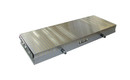
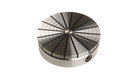
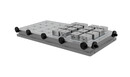



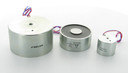




Electromagnets for production: where they make sense
In production, reliability is often not decided by large technologies, but by details that must work repeatedly and without failures. That is exactly why electromagnets for production have a firm place in handling, clamping, sorting, and automation. If selected correctly, they shorten the cycle, stabilize the process, and reduce the number of unplanned operator interventions.
At first glance, the principle is simple – when electric current is supplied, a magnetic field is created that attracts a ferromagnetic part or activates a specific function. In practice, however, the details matter. An electromagnet for continuous operation on a production line is assessed differently from a solution for short-term pulse switching, and differently again from a system that must safely hold a heavier workpiece during handling.

Where Electromagnets for Production Are Used Most Often
In production operations, electromagnets are used wherever controlled attachment or release of material is needed. Typical examples include automated workplaces, feeders, assembly fixtures, packaging lines, and inspection stations. The advantage is that the magnetic effect can be switched on exactly when it is needed and switched off without mechanical intervention.
When handling sheets, pressed parts, or smaller steel components, an electromagnet can replace part of the mechanical gripping systems. This is important especially where conventional jaws would take up space, damage the surface, or slow down the line cycle. In assembly, it also helps with positioning parts before screwing, pressing, or welding.
A separate area is material separation. Electromagnetic solutions are used for separating iron particles from the technological flow, in waste sorting, and also in protecting machines from metallic impurities. In these applications, force is not the only decisive factor, but also the ability to adapt the operating mode to the specific material and line throughput.
Why It Is Not Enough to Consider Only Holding Force in Production
When selecting, the force of the electromagnet is often the first parameter considered. This is logical, but it is not enough. The actual holding force depends on the material, thickness of the part, quality of the contact surface, air gap, and also on the orientation of the load. An electromagnet behaves differently in ideal contact with a ground steel surface and differently with a painted part, perforated sheet, or uneven surface.
In practice, it is therefore necessary to assess the entire working condition. If the part is lifted from the side, shear comes into play. If there is a layer of dirt between the pole and the part, the force decreases. If the magnet is used at a high switching frequency, the thermal stability of the coil is also important. A production technician usually does not deal with laboratory data, but with whether the solution works reliably during a shift, a week, and the entire season.
That is why it is reasonable to include a reserve in the design and not rely only on the catalog maximum. A more conservative design is usually cheaper in production than repeated fine-tuning on the line.
Main Types of Electromagnets and Their Suitable Use
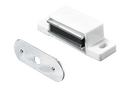
The most common are holding electromagnets, which attract and hold a ferromagnetic object after voltage is applied. They are used in clamping, door systems, position locking, or simple handling operations. Their advantage is a straightforward solution and fast integration into the machine.
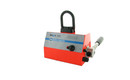
Another group consists of lifting electromagnets intended for material handling. Here, safety, power supply, demagnetization method, and behavior in the event of a power failure must be assessed much more rigorously. Such applications are not designed only according to the size of the load, but also according to its shape, temperature, surface condition, and operating rhythm.
Electromagnetic valves, locks, linear solenoids, or special magnetic units for automation are also often used in production. Although these elements are not always referred to by the same commercial name, the principle is similar – an electrical pulse causes controlled movement or pressure.
For some workplaces, permanent electromagnetic systems are suitable. They combine the advantages of a permanent magnet and electrical control. Compared with a conventional electromagnet, they can reduce energy demands because they need energy only when switching state, not during continuous holding. However, they are not a universal answer for every application. Their suitability depends on the type of process, required safety, and control requirements.
What Matters When Designing for Industrial Operation
If electromagnets for production are to work reliably, more than just the electrical connection must be addressed. The duty cycle is important. Short-term pulse switching allows a different coil load than continuous operation. If this difference is underestimated, the result is usually overheating, parameter changes, and shorter service life.
The power supply is similarly important. In some machines, 24 V DC is standard; elsewhere, a different voltage range is used. Power supply stability, switching peaks, and the method of circuit protection affect not only the functionality of the electromagnet, but also the entire control system. In automation, it is common to also address response time, repeatability, and compatibility with PLC.
The environment plays a significant role. Dust, oil mist, vibrations, increased humidity, or higher temperature change the requirements for construction, protection rating, and service. An electromagnet that works reliably in a clean assembly hall may not be suitable for grinding, a press shop, or a recycling operation. With warmer workpieces, the efficiency of the magnetic circuit also decreases, which must be included in the design before ordering.
When an Electromagnet Is Not the Best Choice
Even a high-quality electromagnetic solution has its limits. If non-ferromagnetic material is handled, an electromagnet will not help. With very complex shapes or parts with a large air gap, the effect may be weak and unstable. In such cases, a mechanical grip, vacuum system, or combined solution is usually more suitable.
The safety logic of the operation can also be a limitation. In applications where a power failure would mean a risk of the part falling or endangering the operator, it is necessary to choose a system with safety protection, backup power supply, or another holding principle. It is not enough that the solution works in normal mode. It must also be predictable in a fault condition.
This is a common point where technical consultation is worthwhile. In paper parameters, two solutions may look similar, but in real operation their behavior differs significantly.
How to Proceed When Selecting an Electromagnet
The most practical procedure starts with the question of what exactly the electromagnet is supposed to do. Is it supposed to only hold the part, position it, lift it, or release it cyclically? The choice of type, power supply, and construction depends on this. Next comes the analysis of the part – material, dimensions, weight, surface, temperature, and repeatability of contact.
Then the operation itself comes into play. It is important to know how often the system will switch, whether it will be a continuous shift, what the surrounding conditions are, and what safety reserve is required. In high-cycle lines, it is also necessary to think about the speed of part release, because demagnetization that is too slow can unnecessarily slow down the entire process.
A reasonable selection does not end with ordering a component. It also includes verification in the specific application, inspection of mechanical mounting, correct protection, and service availability. In industry, it is often more valuable to have a solution that is stable long term and technically supported than to look only for the simplest option on paper.
Service, Maintenance, and Long-Term Reliability
Electromagnets do not require complicated maintenance, but they cannot operate completely without inspection. In operation, it is worth monitoring the cleanliness of the pole surfaces, the condition of the cabling, overheating, and changes in switching behavior. If the magnet gradually loses efficiency, the cause does not have to be only the coil itself. It is often dirt, wear of the contact surface, or a change in working conditions.
In serial production, preventive inspection at intervals according to load has proven effective. It is a simpler and cheaper approach than dealing with a failure when the line is already stopped. This is where a supplier that understands not only the product, but also its use in real technology, has value. SELOS Magnety has long worked with industrial applications where not only component delivery is decisive, but also technical assessment and service support.
Electromagnet as Part of a Functional Process
In production, it is usually not about whether the electromagnet works on a test bench. What matters is whether it improves the entire process – shortens handling, eliminates errors, reduces fixture wear, or stabilizes quality. When designed correctly, it is an inconspicuous element that the operator barely notices. And in industry, that is a good result.
If you are currently dealing with clamping, positioning, or handling steel parts, it is worth looking at the electromagnet not as a universal accessory, but as a precise technical tool. That is when production starts to operate more calmly, more accurately, and with less room for improvisation.