- Magnets
- Raw magnetic materials
- Flexible magnets
- Magnetic systems
- Electromagnets
- Magnetic separation
- Contacts




















Demagnetisation of metal parts in practice
If a steel part behaves like a weak magnet after grinding, it is not a curiosity but a real manufacturing problem. Chips stick to functional surfaces, measurements fluctuate, small particles get caught during assembly, and automated handling introduces deviations that take unnecessarily long to trace. That is why demagnetization of metal parts is a standard operation in many plants, not an add-on.
Residual magnetism occurs more often than expected. It appears after grinding, turning, milling, stamping, after magnetic inspection, and also after handling with strong permanent magnets or electromagnetic chucks. In some parts it is not an issue. However, in precision components, bearing parts, molds, tools, shafts, or thin-walled castings, it can affect both quality and process stability.
Service of magnetic chucks without downtime
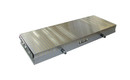
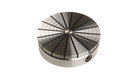
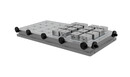
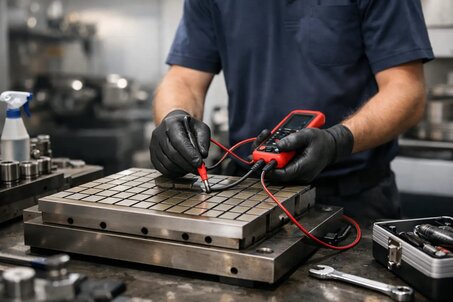
A magnetic chuck often starts signaling a problem before production comes to a complete stop. The workpiece no longer holds as it did before, switching becomes more difficult, unevenness appears on the working surface, or clamping repeatability deteriorates. This is exactly when servicing magnetic chucks makes the most sense – not only after a failure, but at the moment when the device still operates, yet no longer works in optimal condition.
In practice, we still encounter the perception that a magnetic chuck is an almost maintenance-free component. This is only partly true. A high-quality permanent or electro-permanent system has a long service life, but with daily exposure to machining, grinding, handling, and contact with coolants, wear will inevitably appear sooner or later. It is not only about mechanical damage. The flatness of the pole plate, the condition of the control mechanism, sealing, cleanliness of the poles, and the actual holding force in a specific application are equally important.
How magnetic metal separator works
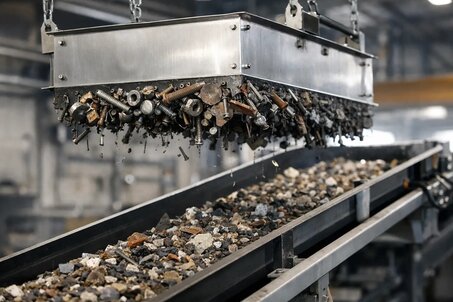
When an unwanted metal part appears in raw material, the problem is usually not small. In the food industry, it means a risk of complaints; in manufacturing, damage to tools; and in recycling, a lower value of the output. A magnetic metal separator is therefore not an accessory in operation, but a functional element that protects technology, stabilizes quality, and reduces losses.
In practice, however, there is no single universal solution. One separator is suitable for fine powder mixtures, another for bulk materials in pipelines, and another for separating metal particles from conveyors. What matters is the type of material, the size and nature of contaminants, flow rate, temperature, and cleaning method. This is exactly where the difference between a cheap catalog-based selection and a technically well-designed solution becomes evident.

How to choose magnetic foil correctly
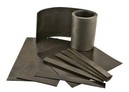
With magnetic sheeting, details matter. At first glance, two materials may look the same, but in practice they differ in holding force, behavior on uneven surfaces, printability, and durability in everyday use. If you are figuring out how to choose magnetic sheeting for manufacturing, labeling, advertising, or regular operations, it is not enough to consider only size and price.
Magnetic sheeting is a flexible material with permanent magnetic properties. It is most commonly used where you need quick attachment without drilling, screws, or adhesive. Typical applications include vehicle advertising signs, interchangeable information systems, shelf labeling, planning boards, educational tools, or technical labels in production. However, different parameters matter in each of these cases.

Where electromagnet is used in practice
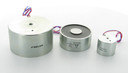
When in operation you need to activate the magnetic force only at a precisely defined moment, a permanent magnet is usually not sufficient. This is exactly where the question of where an electromagnet is used makes sense – wherever controlled attachment, release, lifting, clamping, or separation of ferromagnetic material without complex mechanics is required.
An electromagnet is not just a school example from physics. In practice, it is a functional element of production lines, handling equipment, sorting systems, locks, valves, and lifting technologies. Its main advantage is simple: magnetic force is generated when electric current is applied and disappears, or is significantly reduced depending on the system design, when switched off. This gives engineers and designers exactly what they often need – control.