- Magnets
- Raw magnetic materials
- Flexible magnets
- Magnetic systems
- Electromagnets
- Magnetic separation
- Contacts


















Holding electromagnets for automation in practice
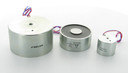
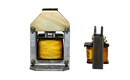
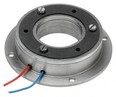
In manufacturing, it is usually not only force that matters, but primarily repeatability. If a workstation needs to grip a part, hold a fixture, or secure a position precisely in line with the production cycle, holding electromagnets for automation are often a more practical choice than mechanical latches or pneumatic solutions. The reason is simple – electrical control integrates easily into machine control systems, the response is fast, and the entire system has fewer moving parts.
However, the advantages do not end there, nor do all the risks begin there. When selecting a solution, it is necessary to consider not only the holding force, but also the working gap, the material of the mating part, load orientation, coil heating, and behavior in case of power failure. These details determine whether the electromagnet works reliably in the long term or only on paper.

Frying magnet on CNC machine: when it pays off
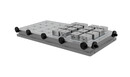
If time is repeatedly lost during milling due to mechanical clamping, a CNC milling magnet is often one of the first ways to reduce setup time without compromising machining quality. However, this does not automatically apply to every part, material, or operation. In magnetic clamping, details matter – from material permeability and workpiece thickness to cutting force characteristics and contact surface geometry.

Magnetic table for grinding in practice
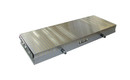
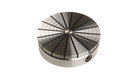
When grinding flat components, fractions of a millimeter and repeatability matter. If the workpiece moves, lifts, or does not hold evenly across the entire surface during clamping, the result quickly shows in surface quality, parallelism, and the time required to complete the operation. This is exactly where a magnetic grinding chuck has a clear role – it enables fast, stable, and repeatable clamping without mechanical jaws or unnecessary adjustments.
For workshops and production, this is not just about operator comfort. A properly selected chuck affects grinding accuracy, machine utilization, and work safety. At the same time, there is no single solution for all cases. The key factors are the material of the workpiece, its dimensions, thickness, shape, and the nature of the operation itself.
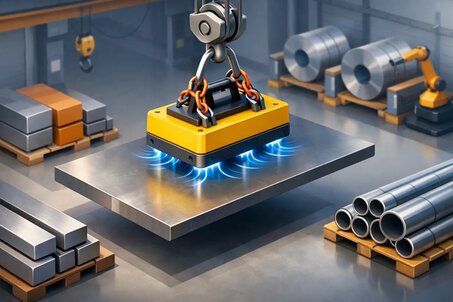
How a lifting magnet works in practice
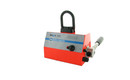
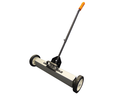
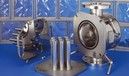
When handling steel sheets or cut parts, seconds matter—but so does the certainty that the load stays exactly where it should. That is why the question of how a lifting magnet works is not only about the principle of magnetism. In practice, it is a combination of the magnetic circuit, contact surface quality, material type, and proper use.

Office magnets on the board: how to choose
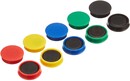
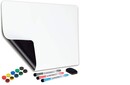
On a board, a sheet of paper, a note, or even a production plan holds only as reliably as the magnet itself. That is why office magnets for boards should not be chosen based only on color or price per pack. In practice, diameter, core material, backing thickness, and whether the magnet is used on a standard whiteboard, planning board, or a metal cabinet in production all matter.
For simple office use, selection is usually quick. However, if multi-page documents, laminated notices, or daily use in high-traffic environments are involved, the difference between a standard and a properly chosen solution becomes immediately visible. The magnet either holds firmly or shifts, falls, and unnecessarily complicates the work.